


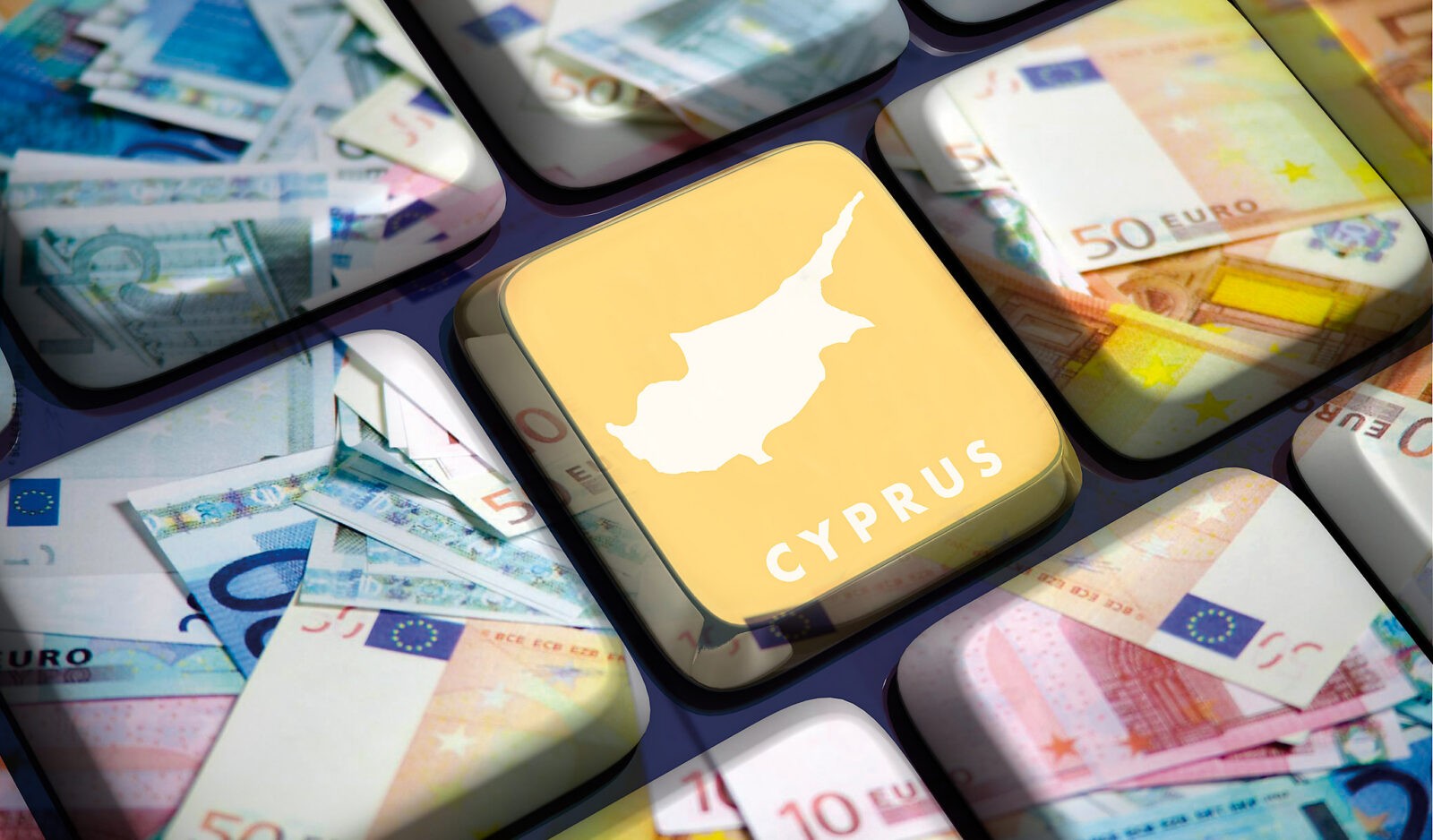
Cyprus tax reform 2026! Cyprus Taxes for Business and Relocators:
Non-Dom Status 2025
Cyprus tax reform 2026 is transforming the landscape for businesses
and individuals looking to relocate to one of Europe’s most attractive jurisdictions.
Learn about new rates, Non-Dom benefits, and the main reasons why moving in 2026 is a
smart financial step.
Why Cyprus is a Tax Haven in the Heart of Europe
Cyprus consistently ranks among the top European jurisdictions
for business relocation. The island nation offers
a unique combination: EU member since 2004, low taxes, transparent
legislation and investment protection.
In 2025, Cyprus maintains all key tax
advantages that make it attractive for entrepreneurs, freelancers
and investors from around the world.
Corporate Tax: from 12.5% to Effective 2.5%
Base Rate and Upcoming Changes
The standard corporate tax rate in Cyprus is
12.5% — one of the lowest in the EU.
From 2026, the rate will increase to 15% in accordance with the global
OECD Pillar Two initiative.
However, even after the increase, Cyprus will remain
competitive thanks to a system of benefits and deductions.
The nominal rate is not the main thing.
The effective tax burden is what matters.
Tax Benefits that Remain
-
NID (Notional Interest Deduction):
legal deduction on capital invested in the company. Allows reducing
the tax base without additional costs. -
IP Box (Intellectual Property Regime):
income from royalties, licenses, patents, software is taxed at
only 2.5%. -
0% on capital gains from the sale of securities
(shares, bonds, other financial instruments). -
0% tax on outgoing dividends
(except countries from the blacklist). -
0% on wealth and inheritance — no tax
on transferring assets to heirs.
For IT companies, software developers, startups and businesses
with intellectual property, the effective rate can be
from 2.5% to 10%.
Non-Dom Status: Tax Shield for Individuals
What is Non-Dom and Who Can Get It
Non-Dom (Non-Domiciled) status is a special tax regime
for individuals who became tax residents of Cyprus but do not have Cypriot
domicile.
Domicile is a permanent place of residence determined
by place of birth (father’s domicile) or choice.
If you were not born in Cyprus and your father was not a Cypriot
resident — you automatically get non-dom status.
Conditions for Obtaining Non-Dom Status
You get non-dom status if you meet
two conditions:
-
You are a tax resident of Cyprus (under the 183-day rule
or the 60-day rule). -
You have not been a tax resident of Cyprus for at least
20 consecutive years before 2015.
The status is valid for 17 years from the moment
of obtaining tax residency.
Non-Dom Status Benefits: Which Taxes You DON’T Pay
Non-dom status holders are exempt
from the Special Defence Contribution (SDC) on passive income:
-
0% on dividends (instead of 17%
for Cypriot domiciliaries) — from any sources, Cypriot and foreign. -
0% on interest from bank deposits
and debt instruments (instead of 30%). -
0% on rental income from real estate
(SDC 3%, only income tax on net profit remains). -
0% on capital gains from the sale of securities
(shares, bonds). -
0% on inheritance and gifts — transferring
assets to family without taxes.
Important: dividends and interest are not subject
to income tax at all in Cyprus, regardless of non-dom status.
Non-dom status exempts from the additional defence
contribution.
Tax Residency: The 60-Day Rule
Two Ways to Become a Tax Resident
Cyprus has two rules for obtaining
tax residency:
1. The 183-Day Rule (Classic)
You become a tax resident if you spend
183 days or more in Cyprus in a calendar year.
No additional conditions are required.
2. The 60-Day Rule (Simplified)
Cyprus’s unique advantage is the ability to obtain residency in just
60 days of stay per year.
To do this, you must meet ALL
conditions:
-
Stay in Cyprus for at least 60 days
in a calendar year (cumulatively). -
Not be in another country for more than 183 days
in the same year. -
Not be a tax resident of another country in the same
year. -
Conduct business in Cyprus, work under an employment contract
OR be a director of a Cypriot company until December 31 of the tax year. -
Have permanent housing in Cyprus (owned or
rented).
The 60-day rule is ideal for digital nomads,
freelancers, entrepreneurs and investors who don’t want to live
in one place permanently.
Cyprus tax reform 2026
Tax residents of Cyprus pay income tax on a progressive scale
from 0% to 35%:
-
€0 — €19,500: 0% (tax-free
allowance) - €19,501 — €28,000: 20%
- €28,001 — €36,300: 25%
- €36,301 — €60,000: 30%
- Over €60,000: 35%
Tax Benefits for Relocating Employees
-
50% exemption on salary over €100,000:
if you moved to Cyprus and receive a salary of €100,000 or more per year, 50% of income is exempt
from tax for 10 years. -
20% exemption or €8,550 (whichever is less):
for salaries under €100,000, valid for 5 years (for employment
from 2012 to 2025).
These benefits apply to foreigners who were not Cyprus residents
before starting work.
Tax Reform 2026: What Will Change
The Cyprus government has presented a tax reform that will come into force
from January 1, 2026. Key
changes:
For Legal Entities
-
Corporate tax increase from 12.5%
to 15% — OECD global minimum. -
Abolition of the Deemed Dividend Distribution
(DDD) tax — simplification for profit reinvestment. -
Retention of NID and IP Box — key
benefits remain. -
Cryptocurrency tax 8% (fixed
rate on profits).
For Individuals
-
Increase of tax-free allowance from €19,500
to €20,500. -
35% rate threshold raised from €60,000
to €80,000 — tax reduction for the middle class. -
SDC on dividends for domiciliaries reduced
from 17% to 5% (does not affect non-doms, they have 0%). -
Non-dom regime remains unchanged —
17 years of SDC exemption.
Business Relocation to Cyprus: Three Ways
Entrepreneurs can relocate their business to Cyprus in three
ways:
1. Open a New Cypriot Company
The fastest and simplest way. Registration takes
2-4 weeks. Minimum share capital
is not required.
2. Change Jurisdiction of an Existing Company
Re-registration of a company from another country to Cypriot
jurisdiction. Suitable for companies with history
and reputation.
3. Cross-Border Conversion (for EU Citizens)
EU citizens can convert an existing European
company into a Cypriot one without liquidation.
Double Tax Avoidance Agreements
Cyprus has signed over 65 agreements to avoid double
taxation, including:
-
Russia, Ukraine, Belarus, Kazakhstan, Armenia,
Georgia - All EU countries
- USA, Canada, United Kingdom, Switzerland
- China, India, UAE, Singapore, Hong Kong
This allows international companies to effectively
structure their business and avoid double taxation.
Who is Cyprus the Best Choice For
-
IT companies and software developers: IP Box 2.5%,
salary benefits, European jurisdiction. -
Investors and traders: 0% on dividends
and interest with non-dom status, 0% on sale of securities. -
Freelancers and digital nomads:
60-day rule, low taxes, Digital Nomad visa. -
Holding structures: 0% on outgoing
dividends, participation in subsidiary profits. -
Trading companies: low corporate
tax, network of agreements, access to EU markets. -
Real estate owners: 0% SDC on rental
for non-doms, tax only on net profit.
Additional Advantages of Cyprus
-
Fast company registration:
2-4 weeks. -
English law: transparent legal
system, understandable for international business. -
Developed banking system:
international and local banks, remote account opening. -
Quality of life: 340 sunny days,
low crime, English language, international schools. -
Geographic location: bridge between
Europe, Asia and the Middle East. -
EU membership: free movement
of capital, goods, services.
Practical Example: Tax Savings
Scenario: IT Entrepreneur with €200,000 Income
Income structure:
- Salary: €100,000
- Dividends from Cypriot company: €100,000
Taxes in Cyprus with non-dom
status:
-
Salary with 50% exemption: tax on €50,000 ≈
€9,900 - Dividends: €0 (non-dom exempt from SDC)
-
Total taxes: €9,900 (effective rate
4.95%)
For comparison in other
countries:
- Germany: ≈€70,000 (35%)
- France: ≈€75,000 (37.5%)
- United Kingdom: ≈€68,000 (34%)
Savings in Cyprus: €58,000 — €65,000
per year!
How to Start: Step-by-Step Relocation Plan
Step 1: Consultation with tax
experts and lawyers
Step 2: Choosing business structure
(new company, re-registration, conversion)
Step 3: Registration of Cypriot company
(2-4 weeks)
Step 4: Opening corporate
bank account
Step 5: Renting or buying property
in Cyprus
Step 6: Obtaining tax residency
(60/183 day rule)
Step 7: Obtaining tax residency certificate
and non-dom status
Step 8: Tax structure optimization
considering IP Box, NID and other benefits
Conclusions: Cyprus Remains the EU Tax Leader
Even considering the corporate tax increase to 15%
in 2026, Cyprus maintains the best conditions for business and relocation
in Europe.
The combination of factors — non-dom status for 17 years,
IP Box 2.5%, salary benefits up to 50%, 0% on dividends and interest, no inheritance
taxes — makes Cyprus a unique jurisdiction.
For entrepreneurs, investors, IT specialists
and digital nomads, this is an opportunity to legally reduce taxes by 5-10 times,
while maintaining full access to the European market and EU protection.
Contact us for professional
consultation on tax optimization, company registration and obtaining residency
in Cyprus. We will help build an effective structure considering all benefits and changes
for 2025-2026.




 WhatsApp
 Telegram