
In short
An investor who buys a whole building from a developer on a turnkey basis and sells the flats directly can, in our experience, make a 15–30% capital gain per project before tax; the cycle from purchase to the last sale runs 1.5–2.5 years. The spread depends on the share of direct sales: the more flats sold without an intermediary, the closer the result gets to 30%. In a joint venture with the developer the return on capital invested is 20–35%: the investor pays for their share rather than the whole building, can come into a more expensive project, and splits the profit with the developer in proportion to the shares. For comparison, letting a flat returns an average 5.51% gross a year (RICS/KPMG index, apartments across Cyprus, Q2 2026). Since 1 January 2026 company profits in Cyprus are taxed at 15%.
Contents9 sections
- 01Three ways to invest in Cyprus property, and what each returns
- 02How we started: as an investment company
- 03How a turnkey project works
- 04Where 15–30% comes from, and why the range is so wide
- 05A joint venture with the developer
- 06What the market and building costs are doing
- 07What can eat into the gain
- 08Tax: 15–30% is before tax
- 09Who this suits
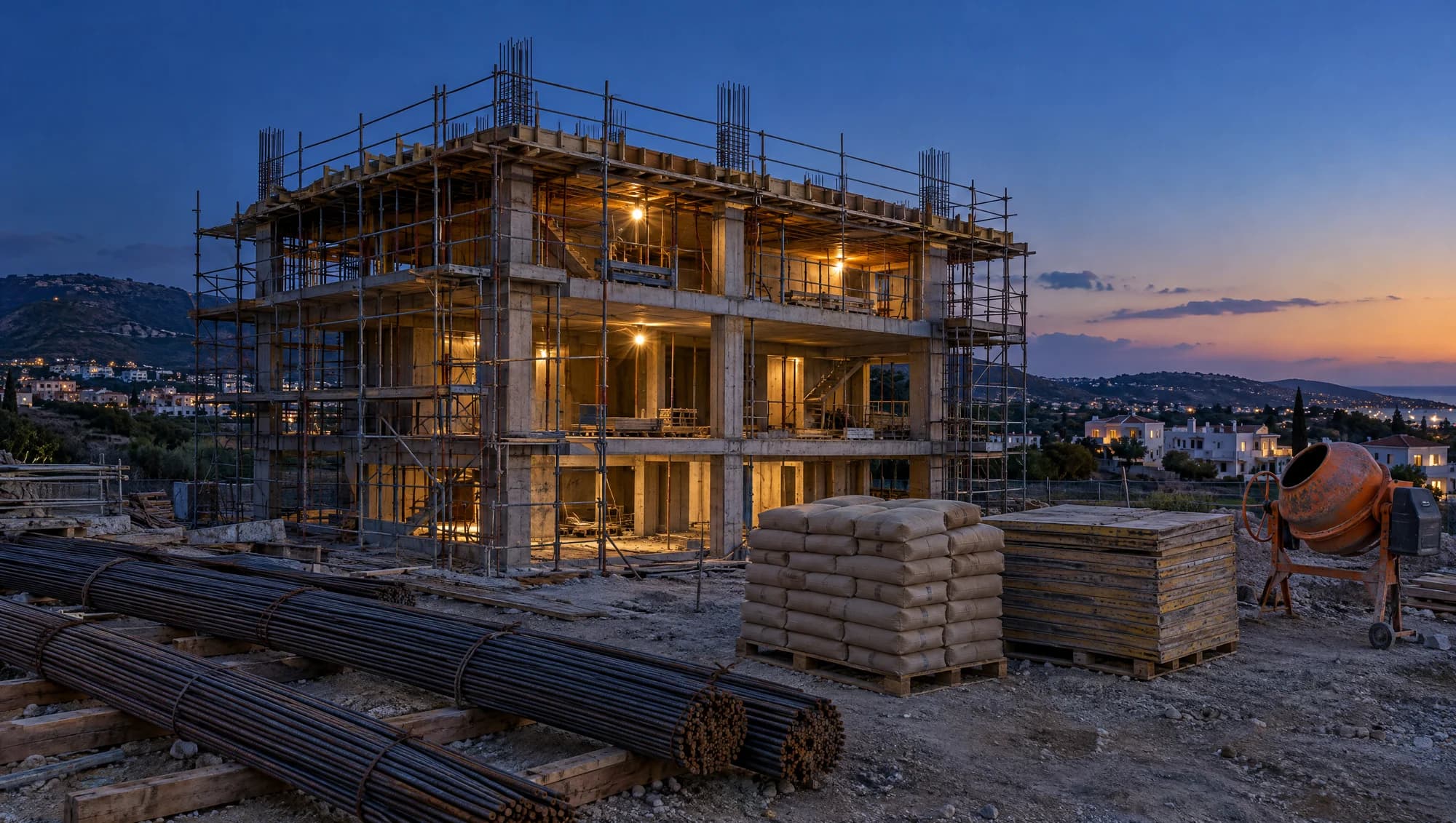
Property development in Cyprus is not only the developer with the land and the crane. There is a second role in it: the investor who buys a whole building from the developer while it is going up, then sells the flats. That is the role our company started in. Below is how such a project works, where the 15–30% comes from, and how it differs from a joint venture with the developer.
Three ways to invest in Cyprus property, and what each returns
| A flat to let | A whole building bought turnkey | A joint venture with the developer | |
|---|---|---|---|
| What you buy | one flat | the entire building, every flat | a share in the project company |
| How you earn | rent every month | capital gain as the flats sell | a share of the project's profit |
| How much | 5.51% gross a year, average for flats in Cyprus | 15–30% per project, before tax | 20–35% on capital invested, before tax |
| Horizon | as long as you own it | 1.5–2.5 years | the project cycle |
| What drives the result | rent level, voids, running costs | share and speed of direct sales | the same, plus the terms agreed with the developer |
| What it takes to get in | the price of a flat | capital for the whole building, paid up front | your share of the cost and the developer's trust |
The rental figure is the market average from the RICS/KPMG index for Q2 2026; what sits behind it and what comes off the gross number is covered in our piece on investment property yields in Cyprus. The two right-hand columns are our own experience on our own developments. They are the results of specific buildings, and the next building may come out differently.
A 15–30% gain per project and 5.51% a year are not directly comparable. Divided out, 15% over 2.5 years is about 6% a year and 30% over 1.5 years about 20%. Rent, though, pays every month for years; a project pays back once, and the money then needs a new home.
How we started: as an investment company
Coastal Edge Development LTD was registered in Cyprus in 2023, registration number HE 448081, as an investment company. The plan was simple: put money into new builds in Paphos and earn on the sale — on the difference between what the project cost us and what the flats sold for, not on commission from other people's deals.
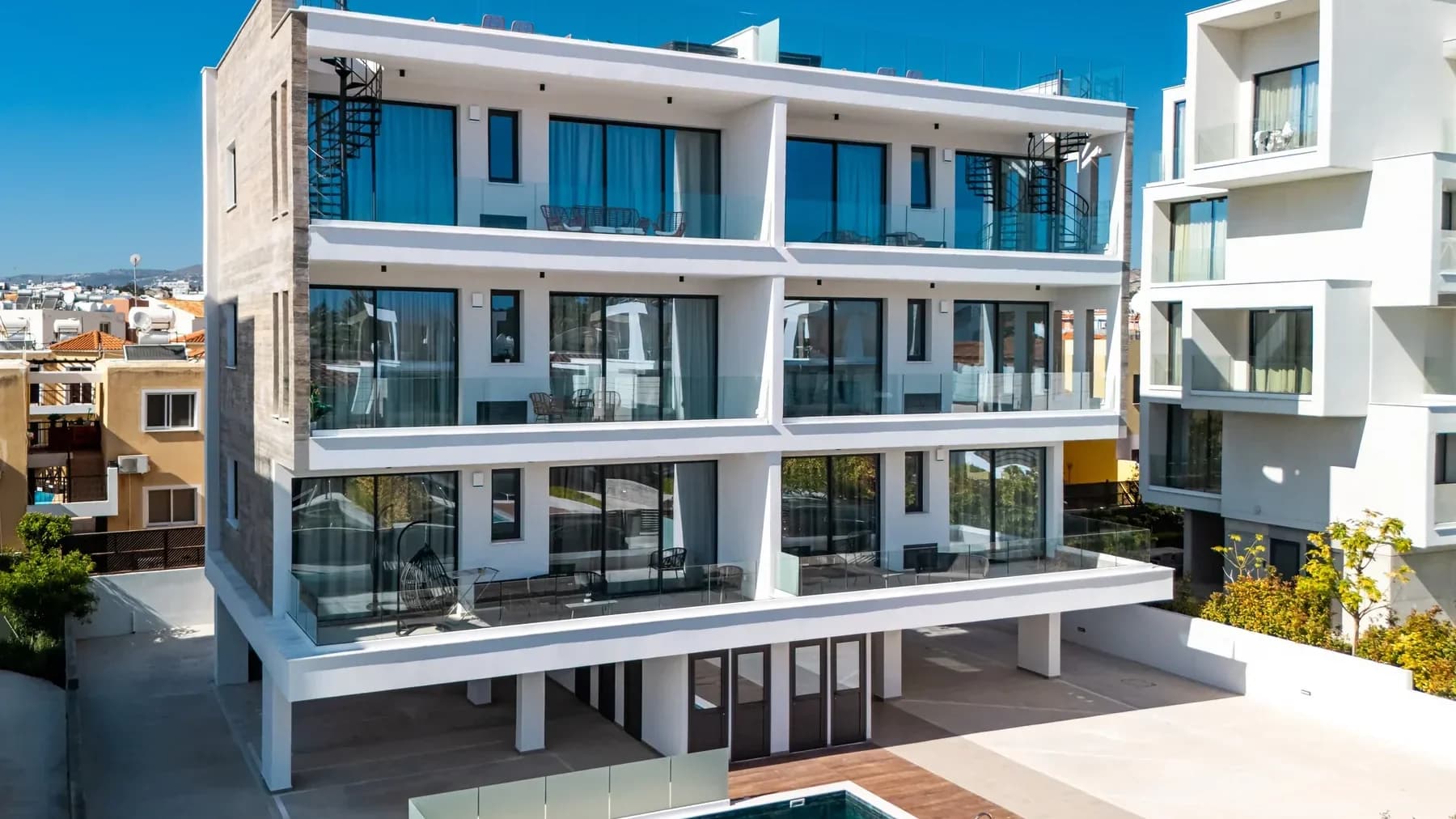
Our first project was Universal Park 1 in the Universal district: a building of six flats. We bought it from the developer on a turnkey basis and sold the flats ourselves. The building is now complete, all six flats are sold, and the title deeds have been issued. The address is no secret: you can go and look at it.
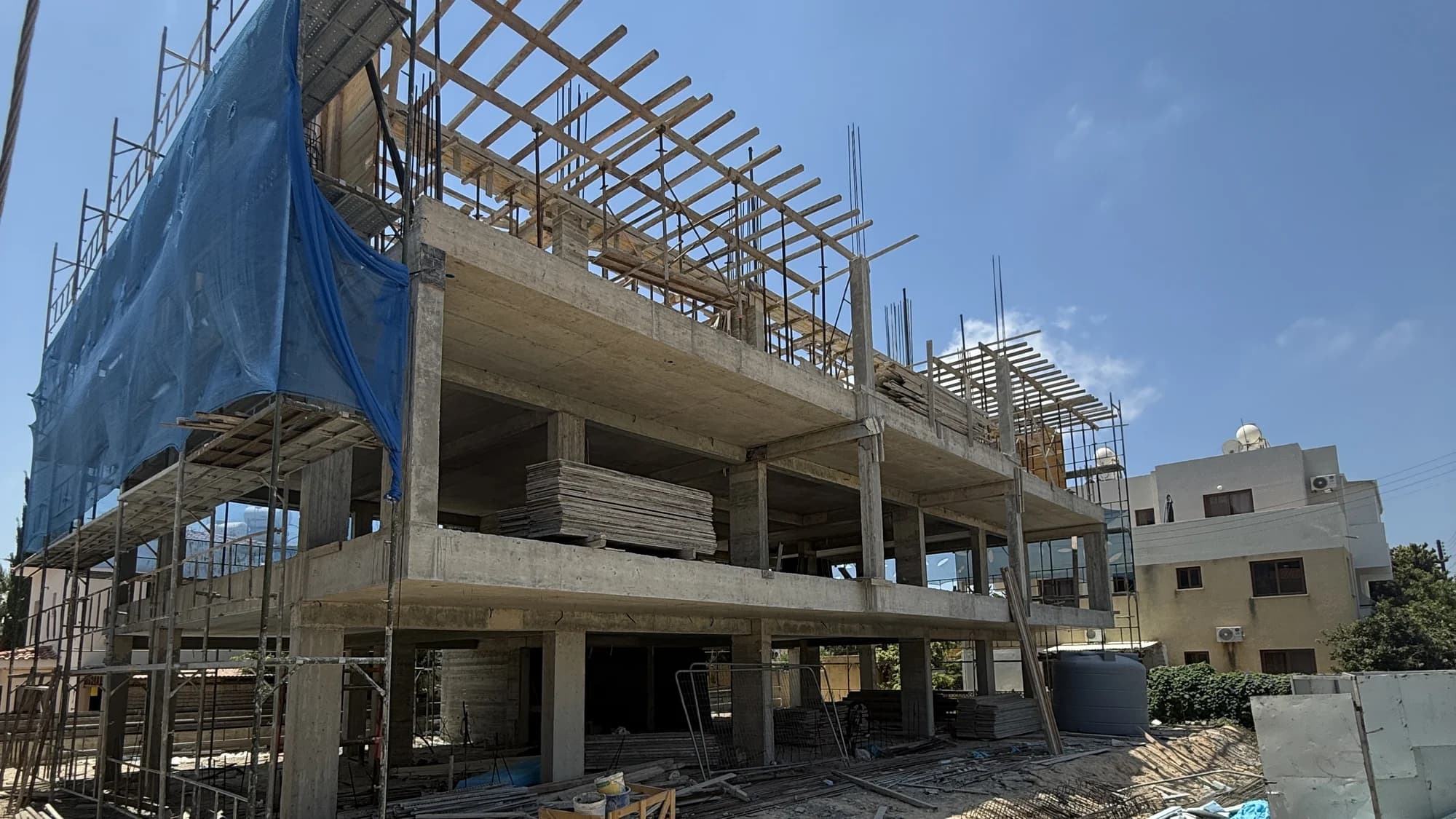
The second is Michelle Park in the same district, seven flats on the same model. Construction is under way, completion is due in Q2 2028, and some of the flats are already sold.
The catalogue of other developers' projects came later. Choosing buildings for your own money teaches you quickly to tell a project that will be handed over on time from one that will stall, and that knowledge is useful to buyers too. Who we are and what we have built is on our about page.
How a turnkey project works
- The developer offers the whole building. It has the land and the building permit. Instead of selling flats one at a time, it sells them all to one buyer for less than the retail prices would add up to. In return it gets construction money sooner and does not spend time selling each flat.
- We check the project before any money moves. Land documents, building permit, budget, stage schedule, contract. The contract is lodged with the Department of Lands and Surveys within six months of signing, which is how the law protects any property buyer in Cyprus; how that works is explained in our guide to title deeds and the sales contract.
- We pay for the building in full, at once. The whole sum goes to the developer on purchase, not in stages. That secures the building for us outright, and sales never have to race the next payment: there is no need to cut prices for quick buyers and hand them part of the profit.
- The developer builds and hands over. Contractors, deadlines and quality are its responsibility. The investor does not hire site managers or buy concrete.
- We sell the flats ourselves. Sales start long before completion: buyers of new builds in Cyprus also pay in stages and do not wait for the keys. The sales contract with each buyer is signed by the investing company.
- We count the result. Sales revenue minus the price of the building, the cost of selling, and tax.
Where 15–30% comes from, and why the range is so wide
15–30% is the capital gain that, in our experience, one project can make: how much comes back on top of the money invested, before tax. The cycle from buying the building to selling the last flat takes 1.5–2.5 years, and sales speed sets its length.
One variable accounts for the twofold difference: the share of direct sales. A flat sold directly brings the project its full price. A flat sold through an agency brings its price less the intermediary's fee, and often less a discount the agent negotiated for the client as well. Same building, same construction, different result.
| How the flats were sold | Capital gain per project |
|---|---|
| Almost all directly | closer to 30% |
| Some directly, some through agencies | within the range: the more direct sales, the higher |
| Almost all through agencies | around 15% |
That is why our own sales channel is part of the project's economics for us: a website with published prices, advertising, and talking to buyers directly. Every flat sold without an intermediary moves the building's result towards the top of the range.
A worked example in round numbers
Say the building was bought from the developer for €2,000,000. At 30% the project returns €2,600,000, which is €600,000 on top. At 15% it returns €2,300,000, or €300,000. The €300,000 difference is the price of who sold the flats and how. The numbers are illustrative; we show the figures for a specific building in conversation.
A joint venture with the developer
The second format works differently. The developer and the investor set up a new company for a single project and each takes a share in it. The investor pays not for the whole building but for their part of the project's cost, the developer puts in the rest, and the profit is divided in proportion to the shares.
How this differs from buying turnkey:
- A 20–35% return on capital invested. That is more than on a building bought turnkey.
- A way into a more expensive project. You do not have to cover the whole cost: you put in your share and split the profit with the developer pro rata.
- Fewer margins to pay. The investor does not buy a finished building from the developer at a mark-up; they are in the project from the start.
- It takes the developer's trust. It lets a partner into its own company: the budget, the accounts, the decisions. Developers offer this to people they have already seen a project through with, not to the first person who turns up with money.
Legally it is an ordinary Cypriot company with several shareholders. How the shares are split, who decides what, what happens if construction is delayed and how each partner exits all go into a shareholders' agreement before the first payment. If you plan to exit by selling your shares, note that shares in a company owning property in Cyprus fall under capital gains tax; our guide to capital gains tax on Cyprus property explains how.
What the market and building costs are doing
The model works as long as people buy flats. Here is what the data showed in September 2026:
- Demand. From January to August 2026, 13,288 sales contracts were lodged with the Department of Lands and Surveys, 13.7% more than a year earlier. In Paphos there were 2,654 contracts, up 19.7%, and foreign buyers acquired 1,871 properties there.
- Prices. The Central Bank of Cyprus residential property price index for Q2 2026 rose 8.5% year on year nationally and 9.6% in Paphos, where flats were up 18.5%. The central bank puts the rise down to demand, mainly from foreign buyers, and to rising construction costs.
- Build costs. Cystat's construction output price index stood at 129.46 in Q1 2026 against a 2021 average of 100: building work costs the client 29% more than in 2021 and 4.7% more than a year earlier. Construction materials were up 3.39% year on year in August 2026.
- Supply. Building permits issued from January to May 2026 cover 8,978 dwellings, against 5,484 a year earlier, up 63.7%.
Our reading of that last line: in two or three years these homes will reach the market together, and buyers will have more choice. A project without its own sales channel will sell more slowly and closer to the bottom of the range. The full tables are in our Cyprus property market 2026 review.
What can eat into the gain
- Construction delays. Buyers pay in stages, and the last payments arrive at completion. A late handover stretches the cycle, and the same profit over three years instead of two is less per year.
- Slow sales. Money tied up in an unsold flat earns nothing. The 2.5-year end of the cycle is what slow sales look like.
- Prices can fall. The central bank's index for Paphos lost a quarter of its value between 2010 and 2016. Our 15–30% was made in a rising market.
- Building costs. Construction is getting dearer: up 4.7% in a year on Cystat's index. Whether the investor or the developer carries that rise is settled by the turnkey contract, so it deserves the same scrutiny as the developer itself, which has to finish the building even as prices climb.
- Rules for foreign buyers. Parliament is discussing amendments to Cap. 109, the law on the acquisition of property by foreigners; they were on the Interior Affairs Committee agenda on 3 September 2026 and had not been passed at the time of writing. Since Brexit, UK nationals count as third-country nationals under this law. It reaches companies too: a company controlled by foreigners counts as a foreigner, but the current text exempts a company incorporated in Cyprus with its registered office here, whatever its shareholders' nationality. One of the amendments under discussion targets exactly these purchases through companies, so check the current rule with a lawyer before the deal.
Tax: 15–30% is before tax
For a company that buys buildings in order to sell the flats, the profit on sale is normally trading income and is taxed at the corporate rate. Since 1 January 2026 that rate is 15%, up from 12.5%. If all the profit in the example above is trading income, the tax on €600,000 is €90,000.
Capital gains tax at 20% applies to property held as an asset rather than as stock. Where the line falls, the Tax Department decides on a set of criteria: how long the property was held, how often similar deals were done, how the purchase was financed. Which tax applies in your case is worth settling with an adviser before the deal.
Money leaves the company for its owner as dividends. How they are taxed for a Cyprus tax resident, a non-dom and a non-resident is covered in our guide to Cyprus tax in 2026. New builds in Cyprus are sold with VAT; how it flows through an investing company is worked out with an accountant for the specific structure before signing. The rates a flat buyer pays are in our guide to VAT on new-build property in Cyprus.
Who this suits
- Investors who can leave capital in place for 1.5–2.5 years and do not need a monthly income.
- Investors after a capital gain rather than a home for themselves.
- Investors prepared to work through a Cypriot company, with an accountant, filings and tax at company level.
If you would like to look at a project you could come into now, message us on WhatsApp or Telegram. We will show you the numbers for a specific building: the price, the payment schedule, the sales plan and the risks in figures. We can meet on the Michelle Park site and at the completed Universal Park 1. If what you need is a home to live in or to let rather than a whole building, that is our catalogue of new builds in Paphos.
The short version
Questions and answers
How much can property development make in Cyprus?
In our experience, an investor who buys a whole building from a developer on a turnkey basis and sells the flats directly makes a 15–30% capital gain per project before tax, over a 1.5–2.5 year cycle. Around 15% when agencies sell most of the flats, closer to 30% when almost all are sold directly.
What is the return on property investment in Cyprus?
It depends on the format. A flat let long term returns an average 5.51% gross a year (RICS/KPMG, apartments across Cyprus, Q2 2026). A new-build project bought whole from the developer returns 15–30% over a 1.5–2.5 year cycle, roughly 6–20% a year by simple division. A joint venture with the developer returns 20–35% on capital invested.
What does buying a development project on a turnkey basis mean?
You buy the entire building, every flat, under one contract at a price below the sum of the retail prices, and pay for it in full at once. The developer gets construction money straight away, skips selling flat by flat, and still builds and hands over the building. The investor sells the flats, often before completion, and keeps the difference.
How does a joint venture with a developer in Cyprus work?
The developer and the investor set up a company for one project: the investor puts in their share of the cost, the developer the rest, and profit is split pro rata. The return on capital invested is 20–35%: you need not fund the whole building, can join a costlier project and pay fewer margins. It is open to partners the developer trusts.
What tax does a property development company pay in Cyprus?
Profit of a company that buys buildings to sell the flats is normally trading income, taxed at the corporate rate: 15% from 1 January 2026. Capital gains tax at 20% applies to property held as an investment asset. Dividends paid out to the owner are taxed according to the owner's own tax status.
Check it without us
Sources
- 01Central Bank of Cyprus — Residential Property Price Index, 2026 Q2 (released 24.09.2026)checked 28 September 2026
- 02Department of Lands and Surveys — contracts of sale 2025 and 2026 by district and month (file dated 01.09.2026)checked 25 September 2026
- 03Department of Lands and Surveys — foreign buyers (EU and non-EU): contracts and transfers, 01.01–31.08.2026checked 25 September 2026
- 04Cystat — Index of Production and Index of Output Prices in Construction: 1st Quarter 2026 (06.07.2026)checked 28 September 2026
- 05Cystat — Price Index of Construction Materials: August 2026 (18.09.2026)checked 28 September 2026
- 06Cystat — Building Permits: May 2026 (released 16.09.2026)checked 25 September 2026
- 07RICS Cyprus Property Index with KPMG in Cyprus, 2026 Q2 (published 25.08.2026), p. 3: gross yields by property type, all Cypruschecked 25 September 2026
- 08PwC Worldwide Tax Summaries — Cyprus, corporate income tax (15% from 01.01.2026)checked 28 September 2026
- 09Cyprus Tax Department — capital gains tax (in Greek)checked 25 September 2026
- 10House of Representatives — Interior Affairs Committee agenda, 03.09.2026 (amendments to Cap. 109)checked 25 September 2026
- 11Department of Lands and Surveys — acquisition of property by foreigners: who grants permissionchecked 28 September 2026
